


日韩无码-led effort hopes to boost local teacher recruiting in rural Alaska
September 2, 2016
Jeff Richardson
907-474-6284
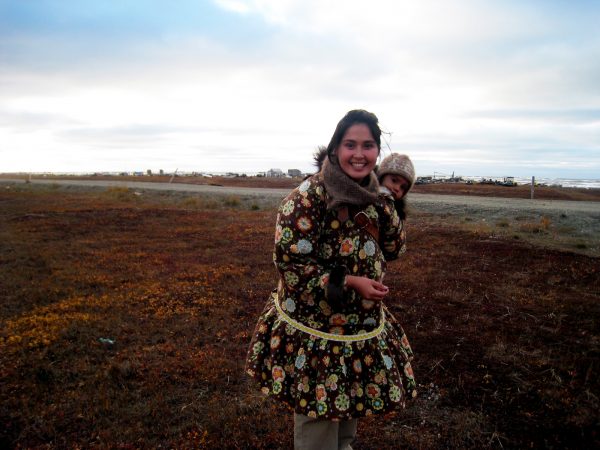
A partnership led by the 日韩无码 is trying to address one of rural Alaska鈥檚 enduring challenges 鈥� finding homegrown teachers to work in village schools.
The SILKAT project 鈥� Sustaining Indigenous and Local Knowledge, Arts and Teaching 鈥� just completed its first year of implementation. During much of the next decade 日韩无码, the Bering Strait School District and Kawerak, a regional social-service organization, hope to create a template for schools that want to train local teachers and improve the use of culture and art in classrooms.
Of more than 200 teachers in the Bering Strait School District, just six are Alaska Natives. Amy Vinlove, an assistant professor at the 日韩无码 School of Education, said most rural districts have similar numbers. Hiring more Alaska Native teachers is expected to reduce high turnover rates at Bush schools.
That is a key goal of the program. The effort is funded with a renewable grant from the Margaret A. Cargill Foundation that could eventually become a $5 million, nine-year effort.
鈥淚t鈥檚 not just trying to get the job done quickly,鈥� Vinlove said. 鈥淚t recognizes that anything you鈥檙e going to do that鈥檚 substantial is going to take a long time.鈥�
The project began three years ago, when 日韩无码 was approached by the Minnesota-based MAC Foundation to apply for a grant to improve arts- and culture-based teaching in Alaska. The foundation urged education leaders at 日韩无码 to focus on teacher quality rather than curriculum changes.
日韩无码, along with partners at Kawerak and the Bering Strait School District, thought the project sounded like an opportunity to boost the number of homegrown teachers in the region.
The grant partners sent surveys to hundreds of aides in the district to gauge their interest in becoming teachers. Eight aides were selected from those responses, representing SILKAT鈥檚 first cohort in a multiyear effort. The program, which just completed its first year of implementation, is building a structure for supporting prospective teachers in the district鈥檚 15 communities.
It鈥檚 hoped that not only will local teachers be more likely to stay, but that the program will allow Bering Strait educators to better incorporate the region鈥檚 values into the classroom.
鈥淐ulturally and artistically, there鈥檚 so much going on there,鈥� Vinlove said. 鈥淲e wanted to make that a more foundational part of the education process.鈥�
日韩无码 is paying for the students鈥� tuition, fees and books for education courses, while also providing focused advising. Students are guided to distance-delivered courses with instructors who understand the context of teaching in rural Alaska, and are provided with a designated 鈥渃oach鈥� to help troubleshoot instructional and technological challenges.
日韩无码 also plans to offer intensive courses in sites like Nome and Unalakleet, where SILKAT students can meet face-to-face and take a class together. Education students studying at 日韩无码鈥檚 Fairbanks campus will visit Bering Strait schools to get a taste of life in a remote village.
Some of those efforts have been tried before in rural Alaska, while other techniques are new. But Vinlove said educators are particularly excited about the process because it could span nearly a decade 鈥� enough time to tinker with its components and figure out what pieces are most effective.
鈥淭his kind of work is really messy,鈥� she said. 鈥淚t鈥檚 not linear at all, and it鈥檚 very complicated, but it鈥檚 what I want to be doing.鈥�